Meet the Speaker - Assistant Professor Margaret Holme
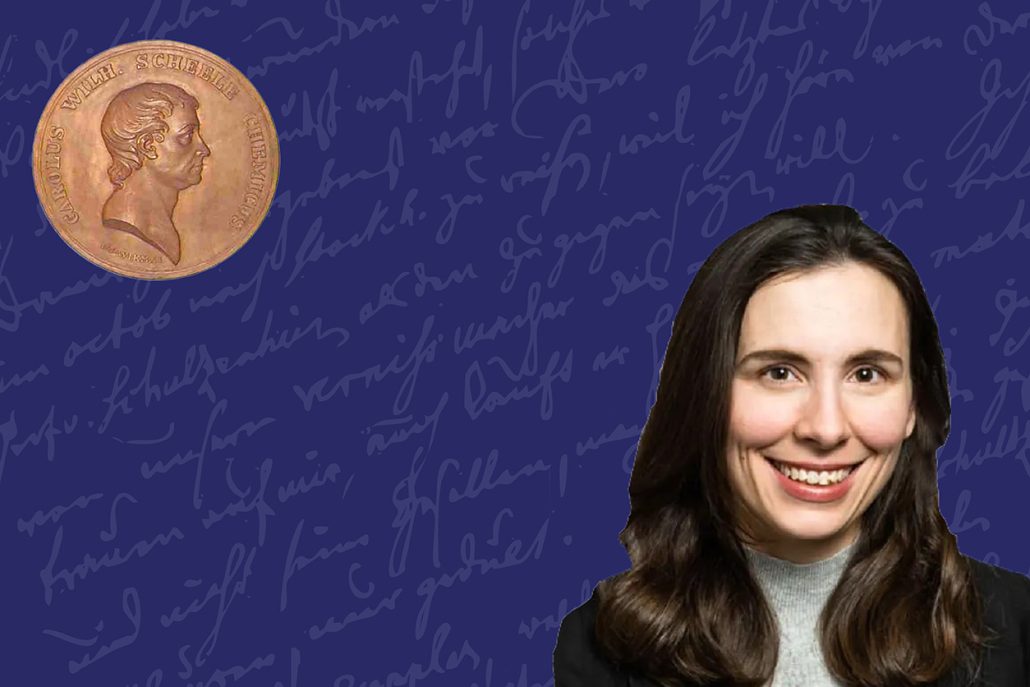
Get a glimpse of the research that you will get the opportunity to learn more about at the Scheele symposium! The Scheele laureate Professor Pieter Cullis is a pioneer in the design, development and optimization of lipid nanoparticles (LNPs) for drug delivery and we will introduce the guest speakers who are all active in related fields. One of them is Assistant Professor Margaret Holme, Chalmers University of Technology, Gothenburg:
How does your research relate to Prof. Cullis’s scientific work?
The pioneering work of Prof. Cullis has showcased how an understanding of membrane biophysical properties can be translated into delivery vectors for nucleic acid therapies. In my research group, we invest significant energy into understanding how lipids arrange in various lipid self-assembled structures, including LNPs and liposomes, and also study lipid bilayers that can be used as model cell membranes to study particle-membrane interactions. In particular, we use X-ray and neutron techniques to characterise the structural arrangement and biophysical properties of these particles and membranes. Like Prof. Cullis, we are very interested in using lipid-based nanoparticles for drug delivery, and to this end we also study extracellular vesicles, which are nucleic acid-containing, lipid-based nanoparticles produced by cells.
Can you explain the potential applications and impact of your researchfor drug discovery/drug development ?
One question we are particularly interested in within my group, is bridging the gap between what we can make synthetically in the lab and what biology designs. To this end, we are studying the lipid composition of extracellular vesicles from a range of cells, to understand what the similarities and differences are between cells from different organs, and from healthy vs cancerous cells. We are beginning to use this knowledge to investigate alternative lipid-based drug delivery systems for nucleic acids and other drugs. We are also developing more biologically representative systems to mimic cell membranes, to deepen our understanding of the mechanisms behind how lipid nanoparticles and other nano-carriers release their cargo.
How will your research contributefor the benefit of patients ?
I hope that this new fundamental understanding, of which lipids are more prevalent in different examples from biology, will shed new light on how extracellular vesicles help cells to communicate with each other. Long term, we aim to apply these findings to help develop new ways to treat disease through designing new nano-carriers for drug delivery.
What are some recent breakthroughs or discoveries that will advance in your field?
Characterising the complexity and heterogeneity of nanoparticles is an exciting new field of research, which is becoming increasingly possible thanks to advances in separation and characterisation techniques, which are now also possible on the single particle level. Such experiments produce significant amounts of data, and computational advances in handling such datasets and validating experimental observations using in silico simulations, are also helping to advance the field.
What advice would you give to aspiring researchers interested in pursuing a career in your research area, and how can they contribute?
This is a tough one! Throughout my career I have always kept an eye out for opportunities, and followed research that I genuinely believe can address what I consider to be the big unanswered questions in lipid-based drug delivery. I think our scientific community is also extremely important – find colleagues, collaborators and mentors who inspire you and challenge you to ask questions from different angles.
Find out who else will be speaking at this year’s symposium
This year’s symposium features experts within the field of Lipid nanoparticles, sharing their insights, research, and real-world experiences. Visit the page to explore exclusive conversations with additional presenters. Get a behind-the-scenes look at their work, what inspires them, and what they’ll be bringing to the stage.
Meet this year’s speakers
This year’s Scheele Award events
The Scheele Symposium – Lipid nanoparticles: Revolutionizing drug delivery
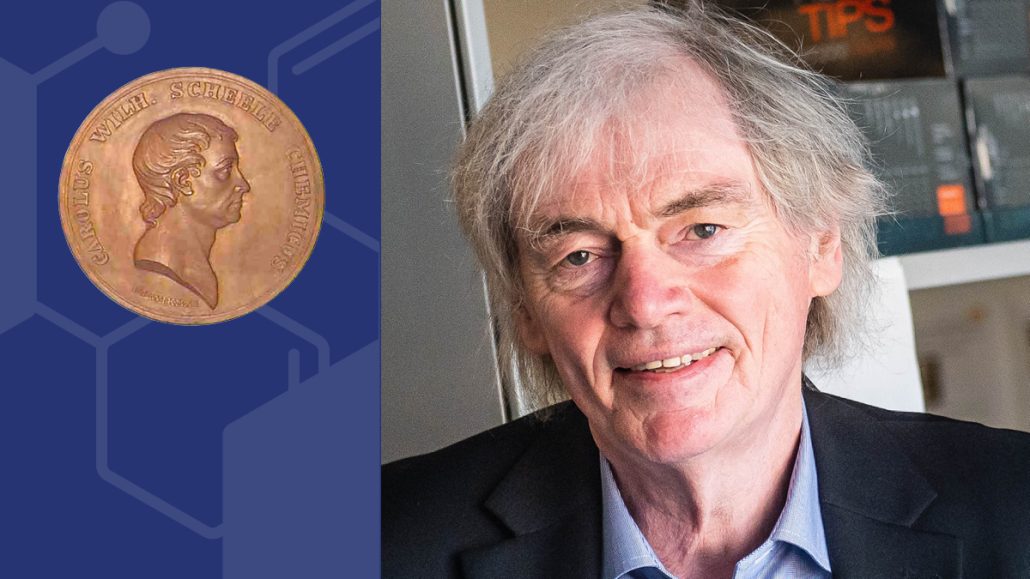
Welcome to the Scheele Symposium in honour of the 2025 Scheele Award laureate, Professor Pieter Cullis.
The symposium focuses on various aspects of his research which spans over several decades and has had a significant impact on both the scientific community and patients.
Young Scientist Day

You are welcome to apply to this year’s Young Scientist Day in drug formulation and nanomedicine!
This year’s winner of the Scheele Award, Pieter Cullis will present his research and reflection from different parts of his carrier during Young Scientist Day, hosted by the Swedish Pharmaceutical Society on November 12, 2025, as a satellite event to the Scheele Symposium.